Hope from Typhoon Haiyan
The successful evacuation of a tiny island community in the path of a devastating storm illustrates the important of preparedness in averting disaster.
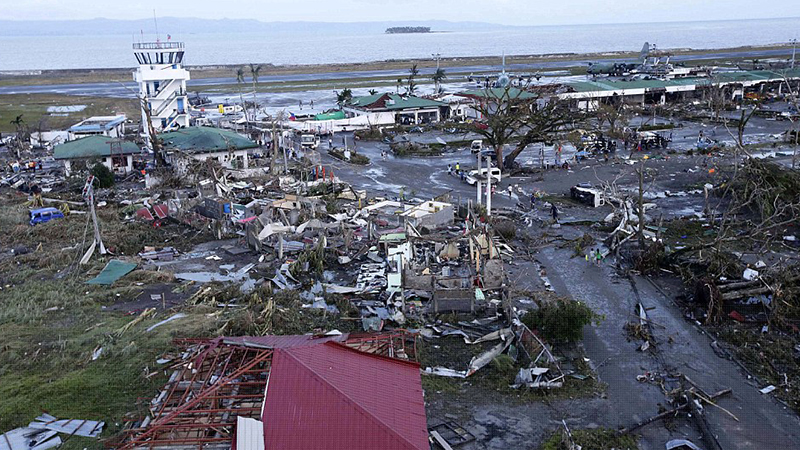
2013’s Typhoon Haiyan was one of the most powerful tropical cyclones ever recorded. It proved particularly devastating for the Philippines, where it was known as Typhoon Yolanda, with over 6000 lives lost in that country.
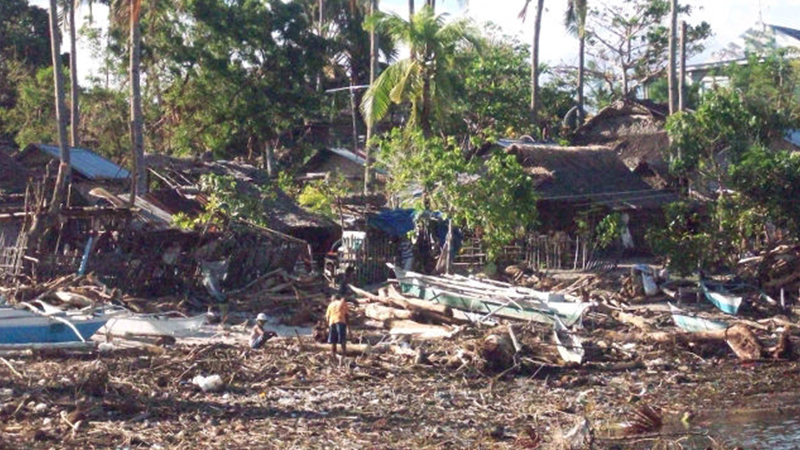
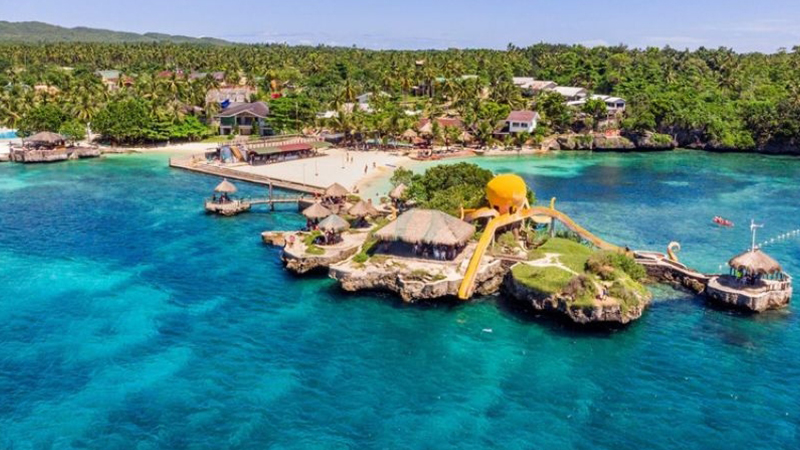
The tiny island of Tulang Diyot in Cebu Province was in the direct path of the storm. “The day before, when it was clear how bad the typhoon would be, we decided to evacuate all 1,000 people,” says Alfredo Arquillano, mayor of Cebu’s capital. “Because we’ve done so much work on disaster risk everyone fully understood the need to move to safety.” Years of work to strengthen community preparedness and reduce disaster risk – particularly through evacuation procedures and early warning systems – prevented a catastrophe for the residents of Tulang Diyot. All 1000 residents were evacuated from the island; all 500 homes on the island were completely destroyed.
The work continues: the island’s people are being assisted in finding safer new homes where they can continue to pursue their livelihoods as farmers or fishermen. The successful evacuation of this vulnerable community provides an excellent illustration of how global initiatives may be applied at the local level. “We have worked hard to localize the international agreement on disaster risk reduction, the Hyogo Framework for Action,” says Arquillano.
In the loss and devastation of natural disasters like Typhoon Haiyan, stories like this often go unnoticed, or even untold. A new award – The Understanding Risk Averted Disaster Award – marks a significant effort to bring these stories to light, so that their lessons might be learned and other communities kept safe. The Averted Disaster Award identifies and receives applications from individuals, project teams and organizations of all sizes, regions and industries whose successful DRM interventions have not been recognized.
If your organization or project meets this description, you’re invited to submit your applications here. The winning applicants will receive up to five cash grants and tickets to attend Understanding Risk 2022, the world’s largest forum for views and innovations in DRM globally. The intervention highlighted in the winning application will be featured in a documentary to be premiered at the event.
HISTORY REPEATS
The destruction of Pompeii is one of the most famous disasters of all time. A modern eruption of Vesuvius could prove even more deadly. Fortunately, measures are in place to mitigate its worst impacts.
The eruption of Italy’s Mount Vesuvius in 79 AD killed at least 2300 people, and destroyed the towns of Pompeii and Herculaneum burying them under meters of hot pyroclastic ash. In the centuries since, a number of eruptions have proven almost as devastating to life and property. And more eruptions are inevitable. However, through early warning systems, risk modelling and evacuation strategies, loss of life and disruption from these events may be minimized.

An eruption today could prove more costly than historical events by several orders of magnitude. At present, around 1.7 million people live in the potentially affected area – according to a 2009 Willis Research Network report, a major eruption of Vesuvius today could result in 8,000 fatalities, 13,000 serious injuries, and total economic losses of more than $17 billion (2008 values). Italy’s Department of Civil Protection identifies 25 separate towns at risk in the event of an eruption, and plans are in place for the evacuation of as many as 700,000 people.

The Vesuvius Observatory
The Vesuvius Observatory, founded in 1841 on the slopes of the volcano but now situated in Naples, is the oldest volcanological observatory in the world. Run by the National Institute of Geophysics and Volcanology, it monitors all of the Campanian volcanoes – Vesuvius, Ischia, and the Phlegraean Fields, as well as Stromboli – enabling long- and short-term forecasting. The observatory monitors seismic activity, ground deformation, and gravimetric and magnetic field variations, as well as changes in the composition and temperature of the gases emitted from fumaroles, soil, and groundwater.
The observatory can provide early warning of an impending eruption, and the science of volcanic eruption modeling provides a realistic sense of what would happen should Vesuvius erupt today. Without the preparedness plans, informed by detailed risk models, the risk to life would be substantially worse.
A new award – The Understanding Risk Averted Disaster Award (ADA) – marks a significant effort to highlight efforts around the world to reduce the impacts of natural disasters. The ADA identifies and receives applications from individuals, project teams and organizations of all sizes, regions and industries whose successful DRM interventions have not been recognized.

Professor Luigio Carmera By Willem van de Poll
If your organization or project meets this description, you’re invited to submit your applications here. The winning applicants will receive up to five cash grants and tickets to attend Understanding Risk 2022, the world’s largest forum for views and innovations in DRM globally. The intervention highlighted in the winning application will be featured in a documentary to be premiered at the event.
Counterfactual Analysis
How do we estimate the value of a disaster that was prevented? Counterfactual analysis is perhaps the most effective tool we currently have to establish how effective our disaster prevention strategies are. Put simply, counterfactual analysis is the study of what might have been – essential in determining the losses averted through disaster risk management.
“We use counterfactuals to imagine and quantify the disasters that could have been” says Dr. David Lallemant, Assistant Professor at the Earth Observatory of Singapore at Nanyang Technological University in Singapore. “In so doing we can highlight the fact that the seemingly ordinary functioning of buildings and infrastructure in the face of floods, earthquakes and typhoons, is in fact extraordinary and worth celebrating.”
Counterfactual analysis enables evaluators to attribute cause and effect between interventions and outcomes. The ‘counterfactual’ measures what would have happened to beneficiaries in the absence of the intervention, and impact is estimated by comparing counterfactual outcomes to those observed under the intervention. The use of counterfactual analysis is increasingly used in disaster risk management field, allowing practitioners to explore the range of outcomes due to highly uncertain and random variables in a growing number of applications including earthquakes, climate change, and volcanic eruptions.
The Understanding Risk Averted Disaster Award (ADA) recognizes and highlights the value of avoiding disasters through better preparedness and risk mitigation. The ADA identifies and receives applications from individuals, project teams and organizations of all sizes, regions and industries whose successful DRM interventions have not been recognized.
If your organization or project meets this description, you’re invited to submit your applications here. The winning applicants will receive up to five cash grants and tickets to attend Understanding Risk 2022, the world’s largest forum for views and innovations in DRM globally. The intervention highlighted in the winning application will be featured in a documentary to be premiered at the event.
Let us make the invisible, VISIBLE!
Disasters make for sensational news stories; disasters which have been avoided do not. A new award corrects this imbalance, celebrating successful interventions and sharing their stories.
In the world of Disaster Risk Management (DRM), success means that nothing happens – paradoxically, this can cause policy makers and society at large to undervalue the importance of proactive intervention. Successful DRM interventions save countless lives, prevent untold suffering and reduce losses by billions of dollars every year, but are almost never reported, let alone celebrated.
A successful intervention can go unnoticed for a number of reasons. For example, it could be made invisible in the midst of broader disaster, or the extent of its benefits may not yet have been realized. In this way, projects and practitioners become victims of their own success. Recognizing this, a new award – The Understanding Risk Averted Disaster Award – has been established to highlight successes in DRM and ‘what might have been’ to recognize the outstanding work of those who invest in measures that keep our communities and world safe. The Award marks a significant effort to bring stories to light of disasters avoided and lives saved, so that their lessons might be learned and other communities kept safe.
“While the news media often highlights catastrophes, they don’t focus on the buildings that stayed standing due to earthquake-resistant building codes, the wildfires avoided due to effective forest management, or the early-warning systems that saved lives in a typhoon,” says Francis Ghesquiere, the World Bank’s practice manager for Disaster Risk Management in the East Asia and Pacific region. “This award will recognize – but more importantly promote – efforts to reduce and mitigate the impacts of natural hazards before they become full-blown disasters.” Crucially, he says, the Award will serve as a forum for gathering and sharing best practices in disaster preparedness and risk reduction, and as time goes on will serve as a valuable repository for knowledge on these areas.
The Averted Disaster Award identifies and receives applications from individuals, project teams and organizations of all sizes, regions and industries whose successful DRM interventions have not been recognized. Winning nominees will receive up to five cash grants and tickets to attend Understanding Risk 2022, the world’s largest forum for views and innovations in DRM globally. The intervention highlighted in the winning application will be featured in a documentary to be premiered at the event.


